





What Is DeFAI? Understanding AI-Driven Decentralized Finance
The world of cryptocurrency moves fast. Just as people were getting used to Decentralized Finance (DeFi), a new concept has emerged: DeFAI. This term blends two powerful technologies—DeFi and Artificial Intelligence (AI).
For many beginners, DeFi can already feel complex. Adding AI to the mix might sound intimidating, but the goal of DeFAI is actually to make things simpler and more efficient.
This guide will explain exactly what DeFAI is, how it works, and why it matters for the future of finance, all without complex jargon or hype.
What Is DeFAI?
DeFAI stands for Decentralized Finance Artificial Intelligence. It refers to the integration of AI agents and machine learning into decentralized financial protocols.
In traditional DeFi, you (the human) have to do everything manually. You decide where to trade, when to lend assets, and how to manage risks. You are responsible for every click and every decision.
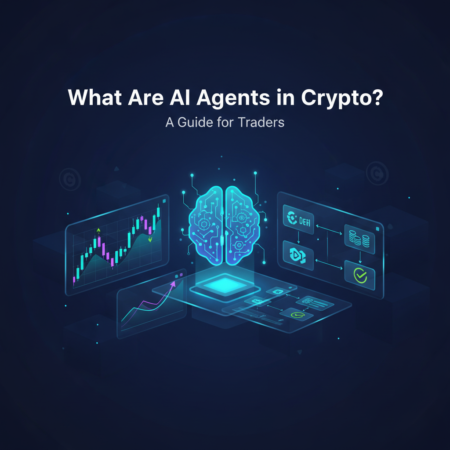
In DeFAI, software programs called AI agents can perform these tasks for you. These agents analyze data, execute transactions, and manage portfolios autonomously based on pre-set rules or real-time market conditions.
Think of traditional DeFi like driving a car with a manual transmission. You control the gears, the clutch, and the steering. DeFAI is like upgrading to a self-driving car. You set the destination, and the car’s computer handles the navigation and mechanics to get you there safely.
How DeFAI Works
To understand how this works, we need to break it down into three simple components: The Blockchain, The AI Agent, and The Interface.
1. The Blockchain Layer
Just like standard DeFi, DeFAI operates on blockchains like Ethereum or Solana. This ensures that transactions remain transparent, secure, and immutable (they cannot be changed once recorded).
2. The AI Agent
This is the “brain” of the system. An AI agent is a piece of software capable of reading on-chain data (like prices and liquidity) and off-chain data (like news or social sentiment). It processes this information to make decisions.
3. Execution
Once the AI agent makes a decision—for example, “Swap Token A for Token B because the price is favorable”—it interacts with smart contracts to execute the trade automatically. The user doesn’t need to be online or clicking buttons.
Real-World Use Cases
DeFAI isn’t just a buzzword; it solves practical problems. Here are a few ways it is being used today:
- Automated Portfolio Management: AI agents can monitor your crypto holdings 24/7. If the market shifts, the agent can rebalance your portfolio to protect your assets without you needing to wake up in the middle of the night.
- Smarter Trading: Instead of simple limit orders, AI can execute complex trading strategies. It can split large orders into smaller ones to get better prices or find the cheapest route for a transaction across different exchanges.
- Risk Assessment: Before you lend money to a protocol, an AI agent could analyze that protocol’s code and history to warn you of potential security risks or scams.
- Predictive Analytics: DeFAI tools can analyze vast amounts of historical data to forecast yield trends, helping users choose liquidity pools with the best potential stability.
Benefits and Limitations
Like any new technology, DeFAI comes with both advantages and drawbacks.
Benefits
- Efficiency: AI processes data much faster than humans, allowing for quicker reactions to market changes.
- Convenience: It automates repetitive tasks, saving users time and reducing decision fatigue.
- Accessibility: AI interfaces can simplify complex DeFi actions, making it easier for beginners to participate.
Limitations & Risks
- Smart Contract Risk: If the underlying code has a bug, the AI might execute faulty transactions.
- Over-reliance: Users might trust the AI too much and stop doing their own research.
- Complexity: Debugging an AI-driven error can be difficult because the decision-making process of advanced AI models is often opaque (“black box”).
Common Beginner Misconceptions
Misconception 1: DeFAI guarantees profit.
No technology can guarantee profit. AI helps make data-driven decisions, but markets are unpredictable, and losses are still possible.
Misconception 2: You lose control of your funds.
In true DeFAI protocols, you usually retain custody of your assets. You grant the AI agent permission to trade or move funds within specific limits, but you can revoke these permissions at any time.
Misconception 3: It is the same as a trading bot.
Trading bots follow simple “if this, then that” scripts. DeFAI agents are more advanced; they can learn, adapt to new information, and handle more complex scenarios than basic bots.
How DeFAI Fits Into Web3
Web3 is about ownership and decentralization. DeFAI fits into this ecosystem by acting as a utility layer.
While Blockchains provide the infrastructure (the roads), and DeFi provides the financial services (the banks and exchanges), DeFAI provides the workforce (the bankers and traders).
Eventually, we may see a “Machine Economy” where AI agents transact with other AI agents on the blockchain, paying for services and data without human intervention. This could drastically increase the speed and volume of economic activity on the web.
What to Explore Next
If you are interested in learning more about the building blocks of DeFAI, consider exploring these topics:
- Smart Contracts: The code that makes DeFi possible.
- DAOs (Decentralized Autonomous Organizations): How communities govern these protocols.
- Automated Market Makers (AMMs): The systems AI agents often interact with to trade tokens.
Conclusion
DeFAI represents the convergence of financial freedom and machine intelligence. By delegating complex and time-consuming tasks to AI agents, users can interact with the blockchain more efficiently.
However, it is still a very new field. The technology is evolving, and risks exist. The best approach is to start slowly, understand the tools you are using, and never treat AI as a magic solution for wealth.
Frequently Asked Questions (FAQ)
Is DeFAI safe for beginners?
DeFAI tools can be helpful, but they introduce new risks. Beginners should stick to well-established platforms and start with small amounts to understand how the AI operates before committing significant funds.
Do I need to know how to code to use DeFAI?
No. Most DeFAI applications provide user-friendly interfaces (dashboards) where you can select strategies or set goals without writing any code.
Can an AI agent steal my crypto?
In a non-custodial setup, the AI agent generally only has permission to execute trades, not to withdraw funds to a different wallet. However, it is crucial to verify the permissions you grant to any protocol.
What is the difference between a bot and an AI agent?
A bot follows a strict, pre-written script. An AI agent uses machine learning to analyze context, adapt to changing situations, and make more autonomous decisions.